Circular Revolution
Documentary pitch
Synopsis
“Global human-made mass exceeds all living biomass”. We were shocked when we read this headline in Nature magazine in December 2020. It’s hard to comprehend the mass of the Amazon or the Taiga. How and why have we produced so much stuff?
The problem is that the global economy is hugely wasteful. It’s cheaper to produce new materials than to reuse them. Businesses recycling materials such as plastics and construction waste have to compete with the low cost of landfills. We’re encouraged to consume and dispose. Indeed, products like phones and laptops are designed to become out-of-date. The rare earth metals in them are lost for good. The assumption is that natural resources are abundant, easy to source and cheap to dispose of. Nowhere is this more evident than in our supermarkets with their overflowing shelves. Deals and discounts are meant to make us buy more than we need. All the while, greenhouse gas emissions are increasing, and the climate emergency is deepening.
But is this how the economy has to work? Can there be an economy that isn’t based on waste? And, if so, what would that kind of economy look like? How would we transition to it? Is it possible in the next decade? What business models and technological innovations could help us? These are some of the questions we want to answer with our documentary.
We plan to set out and look for projects around the world that show that another economic model is possible. By speaking to authors, activists, entrepreneurs and scientists, we’d like to hear diverse opinions and experiences on what has been done and what more can be done. If there are solutions, why aren’t businesses and governments implementing them? What are the roadblocks to a more sustainable economy in which we can reuse materials for as long as possible and retain their value? We want our documentary to be searching, challenging and open-minded. Ultimately, we want to show what the future might look like if we choose to be less wasteful.
Some of the experts we'd like to interview
Amy Clarke, Chief Impact Officer at Tribe Impact Capital
Ashima Sukhdev, Government and Cities Programme Lead at The Ellen MacArthur Foundation
Catherine Larrère, Philosopher and Professor Emeritus at the University Paris 1 Panthéon-Sorbonne
Charmian Love, Chair and Co-Founder, B Lab UK
Geoff Eyre-Walker, Environmental Consultant at Groundsure
Jean-Baptiste Fressoz, Historian of Science, Technology and Environment
Julia Steinberger, Professor of Societal Challenges of Climate Change at the University of Lausanne
Kate Raworth, Economist
Louisa Ziane, Co-founder & COO at Toast Ale
Margaret Klein Salamon, Co-founder of The Climate Mobilization and Climate Mobilization Project
Oladosu Adenike, Agricultural Economist, Founder of I Lead Climate
Olúfẹ́mi O. Táíwò, Assistant Professor of Philosophy
Philippe Bihouix, Engineer and member of the Institut Momentum
Rob Hopkins, Co-Founder of Transition Town Totnes and Transition Network
Schedule
We’ll begin filming interviews in the summer of 2021. Production will take up to two years as we travel in Europe, Africa and South America. We'll aim to premiere the film at an international documentary festival such as IDFA, Hot Docs, or Sheffield Doc/Fest in 2023.
About us
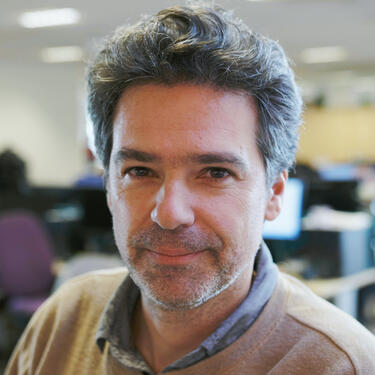
Jean-Sébastien Durocher is a filmmaker, producer and sound designer. After studying film in Canada, he enrolled in the Montreal Conservatory of Music to specialise in electroacoustic composition. During this period, he documented the struggles of landless peasants in Brazil. Art and social issues are at the core of everything he does. Sebastien is currently working at Oxfam Great Britain as a filmmaker and producer. He’s also the founder and co-director of Québecine, which is a Quebec film festival in Mexico.
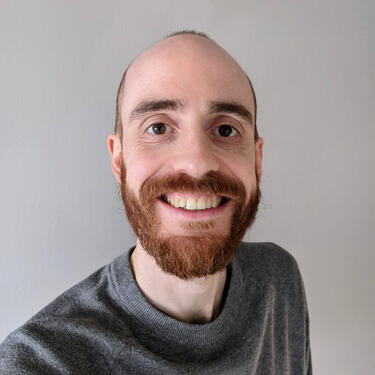
Micha Hilliard works as a filmmaker, mostly in the charity sector. He started making documentaries for small charities after graduating from Oberlin College in the U.S. At the time, he also shot fifteen episodes of the documentary series The Amerikans and received a Vimeo Staff Pick for his short film I’ll Be Fine. He went on to work as a director at the production company Fancy Rhino. Since 2016, Micha has been living in the UK. He was initially a filmmaker and producer at Oxfam Great Britain. Now, he’s the digital content producer at the mental health charity Samaritans.